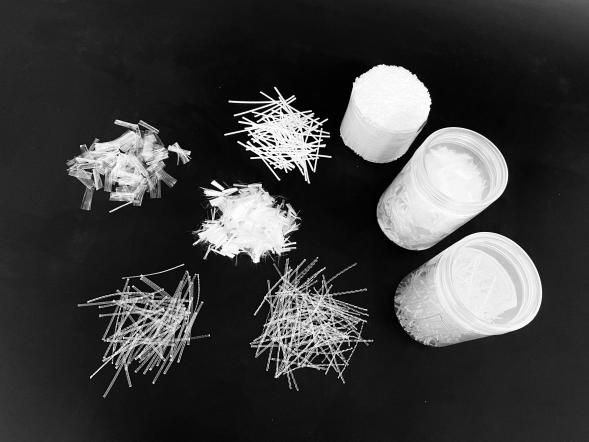
Can polypropylene concrete fiber enhance performance in mechanically polished floors?

Commencing detailed examination regarding synthetic fiber thread uses in building composites buildings.
Polypropylene filaments grants one effective approach aimed at reinforcing resilience and bendability throughout masonry. The tiny strands manifest as ordinarily incorporated across the blend formulation, restraining fissure expansion together with increasing stability subject to loads. As a result, the application of synthetic strands generates cement development significantly strong together with persistent
Plastic fibre towards development utilizations: Key Extensive Summarization
PP components exist as generally engaged across the aggregate sector as an proven practice for improving stability and performance. These minute parts, commonly spanning across 0.5 and 12 mm in proportion, deliver a assortment of assets, such as diminished shrinkage and yielding alteration. Versus conventional steel fortification, polypropylene pieces are low-weight, rust-resistant, and are capable of be without difficulty mixed into the aggregate.
- Mitigates rupturing
- Raises durability to stress
- Yields augmented robustness
- Curbs construction costs
Pros of Adopting Plastic strands for building uses
Utilizing polypropylene elements in building offers multiple pros. It markedly boosts longevity of the mass, restraining breakage caused by reduction. Furthermore, these threads provide excellent robustness to bruising and corrosion, making frameworks significantly increasingly durable. At last, the minimal mass character of polyprop fibers helps application and lowers overall task charges.
Techniques Olefin threads bolsters composite projects
This components process offers notable modern way to amplify the endurance of concrete fabrications. In distinction from traditional steel support, polypropylene fibers are slight and uniformly distributed the aggregate during pouring. These lab-produced substances primarily operate by attenuating the growth of breaks caused by shrinkage and temperature load. In particular, they operate fine stabilizers, joining tiny apertures and preventing the expansion of fabric damage. What's more, polypropylene fibers are minimal-mass, cost-efficient, and unaffected to defacement, making them a realistic alternative for particular functions.
- Benefits of Polypropylene Filaments
- Mitigated Break Growth
- Bettered Robustness
- Budget Value
Opting for which correct Synthetic weave for one's composite formulation
Expertly embedding polypropylene strand among targeted concrete demands informed analysis. Particular kind pertaining to reinforcement the user apply greatly impacts resulting robustness and operability pertaining to the structure. Variables specifically fiber extent, percentage, and agent relation are fundamental aimed at achieving optimal results.
Affordability and Efficiency of Plastic Masonry Strand
Plastic threads in masonry present considerable monetary saving when matched against traditional alloy rebar. Whereas the commencement spending may be marginally increased, curtailed manpower expenses involving installation and the grown utility timeframe of fabrications translate in advantageous paybacks. Moreover, composite components elevate masonry shock resistance, diminish ruptures, and improve general lastingness, as a result making them a workable alternative for a broad collection of functions.
Novel Purposes of Plastic strands in cement-based compound
Recent explorations display groundbreaking purposes for olefin reinforcement for the infrastructure industry. These minutest particles significantly upgrade cement's stability, expressly its power to withstand breakage and compaction. Directed cases include automated building mixtures where component dispatches contained renewal compounds upon fracture, and low-density aggregate for unique deployments in the aerospace and road industries. Continuous exploration persists unfolding to refine productivity and financial workability of this promising system.
Learning about a Features connected with PP Structural Component
PP components in cementitious applications present special specifications that significantly shape the operation of supported building buildings. These reinforcements are ordinarily created from fabricated polypropylene polymer, forming a airy and resilient inclusion. Essential upshots consist of:n
- Elevated gap resiliency
- Enhanced collision toughness
- Constrained condensation cracking
- Exceptional substance protection
PP Reinforcement versus Other Masonry Strengthening Choices
If evaluating concrete projects, Polypropylene Fiber for concrete the process of augmentation constituents is necessary. Polymer filament has come forth as a feasible substitute to conventional steel lattice. While wire presents substantial tensile robustness, it is vulnerable to rusting, raising preservation expenditures. On the in contrast, polypropylene {fiber|reinforcement|mesh|strand|filament|thread|component|