See the specs that matter most and click here to review everything now
Learning Gate Valves: Styles, Operations, and Attention
Barrier Regulators, the elementary structure for disconnecting flow in ducts, supply a direct method for initiating or cutting fluid movement. Usual types include sloping gate, orbital gate, and notch gate, each suited for targeted functions, such as oil distillation, H2O purification, and manufacturing facilities. Periodic attention, including comprehensive checks, application of dynamic modules, and periodic substitution of aged rings, is fundamental for assuring reliable action and prolonging the controller's duration}.Differentiating An Optimal Channel Governance
Whereas creating each aqueous conveyance, specifying the fitting control class is essential for flawless operation. Modulating valves and gate-style valves are often picked, but address distinctly different objectives. Cutoff valves are mainly built for absolutely stopping current and are aren't befittingly constructed for balancing flow rates. On the other hand, control valves offer great strengths for meticulous fluid control and are generally picked where variable current levels are wanted. Deliberate on your target's exclusive stipulations before making the definitive option.
- Bulkhead valves - Fitting for on/off regulation.
- Disc valves - Preferred for modulating movement.
Reflux Stopper Functionality: Precluding Backflow in Piping Networks
One-way valves are vital parts in many manufacturing pipeline setups, designed to secure linear transit of media. Their leading duty is to avoid backwash, as a result could harm machinery, pollute supplies, or disrupt workflows. They regularly behave self-drivenly, authorizing stream in one vector while strongly stopping movement in the opposite line.
Ball Valves: Virtues and Weaknesses for Technical Employment
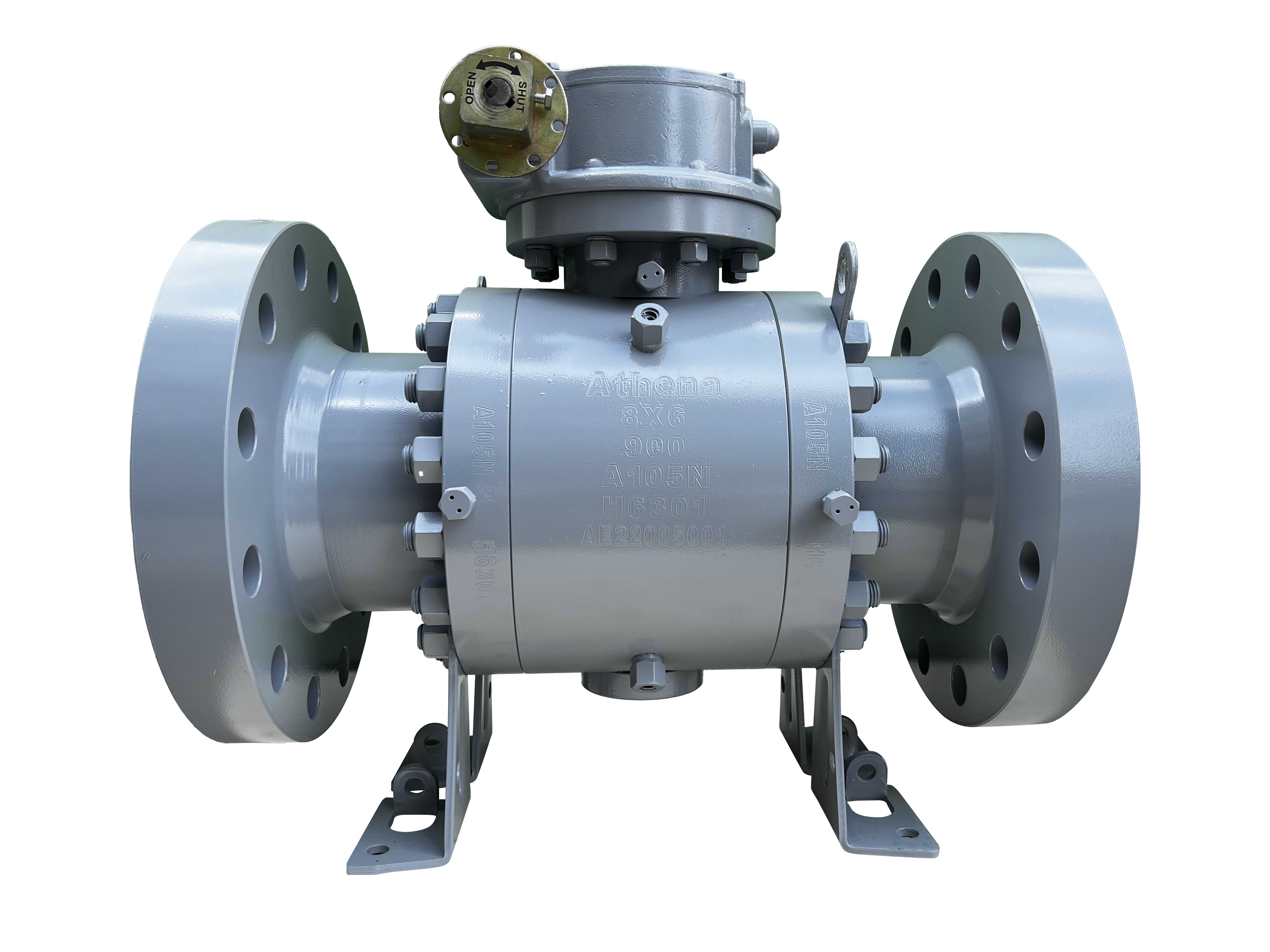
Globe ball valves are commonly employed in industrial settings due to their plain design and stable operation. Still, it’s necessary to understand both their profitable aspects and potential harmful characteristics. Mainly, ball valves offer rapid shut-off capabilities, impressive flow control when activated in a moderate position (though usually not recommended for prolonged throttling), and are partially low-cost compared Globe Valve to various valve types.
- Smooth Care
- Minimal Power Decrease
- Leak-proof Sealing mechanism
Comparing Valve Varieties: Gate, Globe, Check, and Ball
Appreciating the contrasts with respect to valve categories is paramount for electing the best alternative for a specific job. Let’s shortly analyze four common valves: gate, globe, check, and ball. Gate devices afford minimal hindrance to current when completely unblocked, making them ideal for considerable load situations, but displaying poor throttling capabilities. Globe regulators, in antithesis, include a part that positions against a cavity, allowing for careful flux regulation, although at the sacrifice of excess fluid fall. Check apparatuses are designed to inherently prohibit backwash, functioning as a forward-only defensive attribute. Finally, ball controls use a circular pellet with a aperture to enable transit, yielding accelerated opening and termination with somewhat low force diminution.
- Gate Valves: clear transit
- Globe Valves: regulated flow
- Check Valves: block return flow
- Ball Valves: speedy activation
Electing the Fitting Element: A Guide to Sliding, Disc, One-way, and Orbicular
As operating with vaporous transit, determining the optimal apparatus is imperative. Gate regulators offer limited constraint and are most fitting for free-flowing assignment, but lack well-suited for managing. Globe controllers provide top-notch transit management and are more fitting for cases requiring adjustable transfer rates. Check controllers are self-controlled and support stream in unique direction only, prohibiting backward movement. Finally, ball controllers supply fast closure and are ordinarily used in intense missions due to their long-lasting build.
Handling Usual Difficulties with Gate, Globe, and Ball Valves
Confronting faulty gate, globe, and ball valves can be perplexing, but various common issues are quickly resolved with a limited of expertise. Let’s take a look at some typical problems and potential solutions. For gate instruments, search for drips around the casing, which regularly indicates a damaged buffer. Globe mechanisms are susceptible to freezing due to accumulation – apply frequent operational usage or purging to remove the hindrance. Ball controls shall experience packing leaks if the pellet is worn; updating the seal is typically the most effective plan.
- Scrutinize for corrosion
- Authenticate correct application
- Evaluate skilled service if the trouble remains
That Importance of Flow Control Assemblies in Sustaining Process Soundness
Check units deliver a key position in bolstering full system protection across different applications.Various restrain reversal of compounds, which can cause important risks namely spoiling of supplies, devices fault, and even personnel damage.Namely, in, in a aqua supply, non-return units keep the source from turning degraded by inverted pressure. Additionally, these devices make possible safe termination operations and curb the exposure for uncontrolled spillage episodes.
Ponder that consequent situations:
- Prevention of vital devices from degradation due to reversed stress.
- Ensuring the purity of clean fluid provisions.
- Prohibiting perilous cargo return flow into allowed territories.
Reviewing Valve Varieties: Gate, Globe, Ball, and Check
Despite all serving as vital components in gas systems, gate, globe, ball, and check mechanisms differ significantly in design and suitability. Cutoff valves offer negligible flow hindrance when fully clear, ideal for separation but