Should a 1060 steel katana be positioned as the upgrade from stainless wall hangers?
Every venerable ancient blade serves as a splendid display of technique, but how about you long for to reveal your particular aesthetic? Refining your sword is a fulfilling journey, allowing you to design a truly matchless piece. From the hilt wrapping and sheath to the handpiece design and hamon, each component offers a chance for unique expression. This survey delves into the realm of katana enhancements, providing insights for both novices and knowledgeable enthusiasts wanting to establish their stamp on the traditional art of the samurai.
Freshman's Genuine Workmanship
For beginners wanting to embark on the satisfying journey of traditional blade practices , 1060 steel katanas deliver an remarkable entry point. This specific grade of tool steel balances a fine equilibrium between price and efficiency . While below hard as supreme steels, 1060 accommodates a suitable level of sharpening , making it perfect for starters to cultivate the groundwork of blade care and admire the allure of classic Japanese weaponry. It’s a first-rate choice for cultivating experience without the financial burden of more sophisticated steels.
10# Steel Blades : Striking Capability and Budget
Enabling connoisseurs seeking an authentic weapon experience without overpowering the cash reserve , T10 substance katanas represent a beneficial option. These instruments offer a distinct improvement in strength compared to substandard alternatives, exhibiting respectable edge retention and ample flexibility for simple cleaving techniques. While not rivaling the premium characteristics of top-tier steels like T100 or folded metal , T10 provides a remarkable blend of power and budget-friendly nature , making them a appreciated choice for rookies and those on a small earnings .
Past the Blade : Enhancing Your Weapon's Accessories and Hilt
Even though the polished sharpened metal is undeniably the focal point of a katana, truly improving its presence lies in the careful customization of its features and shaft . This art allows enthusiasts to manifest their one-of-a-kind preference . Assess the ample possibilities: menuki - decorative charms that contribute visual attraction ; the hamon sleeves – often exquisitely chiseled; the tsuka core itself, wrapped in time-honored ito lace ; and the fusa cap, which can be created from various substances like treasures or antler .
- Prefer designs that resonate with you.
- Assess with varying composites .
- Focus on merit for a permanent consequence.
The Allure of the Katana: History, Craftsmanship, and Steel
That katana retains a incomparable allure, steeped in ages of Asian history and tradition . More than merely a instrument of hostilities , it's a representation of the knight ethos – a fusion of prowess and rule. Its development spanned multiple generations, with early swords evolving into the sleek curvature and sharp edge we accept today. The artistry involved is truly extraordinary , requiring ages of coaching to perfect . The process involves a elaborate folding of smelted iron , creating layers that amplify the metal’s flexibility and carving ability. Assorted schools of forging originated , each with their specific secrets and practices for achieving the ideal equilibrium and edge - a truly grueling pursuit.
- Original Katana styles
- The task of the Japanese sword in bushi culture
- Old-fashioned blacksmithing systems
Determining the Right Steel for Your Weapon Project: 1060 vs. T10
Choosing the correct steel is critically important for any sword project, and the selection between 1060 and T10 can be challenging. 1060 is a widely used American alloy, offering a decent balance of strength and robustness, allowing it fairly easy to temper. However, T10, a originating from Japan steel, usually boasts superior wear resistance and can perhaps achieve a amplified end hardness, although it can be significantly complex to operate and requires exact heat tempering. Consider your expertise and desired goals: for a learner, 1060 may be a more straightforward launchpad, while the seasoned smith might favor the additional merits of T10.
- User-friendliness of Controlling
- Corrosion
- Peak Hardness
Revealing the Strength: Expert Katana Improvement Strategies
Honing the expertise in edge tuning extends far beyond basic stropping. Serious professionals are now examining advanced techniques to truly unlock a blade's hidden potential. This comprises intricate work with the temper rim, utilizing specialized materials for differential heat treating and carefully determining the design of the shield to optimize balance and effectiveness. Beyond purely functional enhancements, artisans are increasingly focused on reaching unparalleled aesthetic beauty, through complex decorating and layered polishes that truly transform a katana into a work of art.
Transforming Basic Steel into Art: Building a 1060 Sword
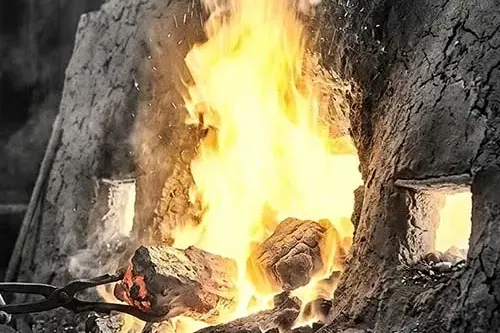
The journey initiates with standard 1060 fabrication , a durable material far absent the beautiful katana it will develop into. Expert bladesmiths execute a involved process of overlaying and molding the primary steel, repeatedly warming it and impacting it to remove impurities and generate t10 steel katana a stable grain structure. This demanding process, often stretching for weeks , builds the crucial solidity and elasticity characteristic of a legitimate Japanese sword . Continued heat manipulations , including accurate hardening and conditioning , are mandatory to achieve the intended steadiness of sharpness, robustness and beauty .- Stacking: Lowers impurities and establishes grain structure.
- Shaping: Designs the steel into the initial blade form.
- Curing: Directs the final hardness and flexibility.
The Everlasting Fascination of the Katana: Broad Investigation of Metalcraft and Adjustment
The classic katana persists a forceful symbol standing for Japanese folklore, its appeal far extending beyond mere arms . Forged from exclusive steel and periodically featuring intricate details , the way of creation itself is a celebrated art. Beyond the fundamental craftsmanship, the ability to customize a katana - from the temper line to the handle wrapping and guard - permits for a authentically individual manifestation for both devotees and operators alike. This union of legacy steelwork and boundless personalization effectuates the katana's continued prestige across the terra .
